If you or a loved one needs help remaining safely at home, understanding the requirements for home care in New York City is an important first step. Home care can range from assistance with bathing, dressing, meals, and household tasks to skilled nursing, rehabilitation, and other clinical services.
The requirements depend on the type of home care needed, how the services will be paid for, and whether the person is applying through Medicaid, private insurance, Medicare-related coverage, or private pay.
This guide explains the main NYC home care eligibility requirements, what assessments may be necessary, how Medicaid home care works, and what families should know before choosing a home care agency.
Quick Answer: What Are the Requirements for Home Care in NYC?
There is no single eligibility rule that applies to every type of home care in New York City.
In general, a person seeking home care may need to:
- Have a medical, functional, or personal-care need that can appropriately be addressed at home.
- Complete an assessment when required by the payer or program.
- Meet the eligibility requirements of Medicaid, Medicare, an insurance plan, or another program paying for the services.
- Have an appropriate plan of care or service authorization when required.
- Use a New York State licensed or certified home care provider when services are being provided or arranged by a home care agency.
New York State defines home care broadly as health services delivered in a patient’s home to maintain or restore health or reduce the effects of illness and disability. Services can include nursing, physical therapy, occupational therapy, speech therapy, home health aide services, and personal care.
What Is Home Care in New York City?
Home care allows older adults, people with disabilities, people with chronic health conditions, and individuals recovering from an illness, injury, hospitalization, or surgery to receive assistance where they live.
Depending on the individual’s needs, services may include:
- Bathing and personal hygiene
- Dressing and grooming
- Toileting
- Mobility and transferring assistance
- Meal preparation
- Light housekeeping
- Medication-related assistance within the caregiver’s permitted scope
- Home health aide services
- Skilled nursing
- Physical therapy
- Occupational therapy
- Speech therapy
The correct level of care depends on the person’s functional and medical needs.
Who Qualifies for Home Care in New York City?
Eligibility depends primarily on what kind of home care the person needs and who will pay for it.
Someone paying privately for services through a Licensed Home Care Services Agency, for example, will generally follow a different process from someone seeking Medicaid-funded Personal Care Services.
For Medicaid-funded programs, eligibility can involve financial eligibility, functional assessments, medical requirements, and program-specific criteria.
Therefore, being older, disabled, or diagnosed with a medical condition does not automatically determine the amount or type of home care a person will receive.
Medicaid Home Care Requirements in NYC
Medicaid is one of the major sources of long-term home care coverage in New York.
Depending on the individual’s circumstances, Medicaid-funded home care may be delivered through programs including Personal Care Services (PCS) and the Consumer Directed Personal Assistance Program (CDPAP/CDPAS).
An applicant generally must first be eligible for New York State Medicaid and then satisfy the requirements of the particular home care program.
The Minimum Needs Requirements
One of the most important recent changes concerns the Minimum Needs Requirements.
Effective September 1, 2025, certain Medicaid recipients seeking initial eligibility for Personal Care Services or Consumer Directed Personal Assistance Services must satisfy new functional eligibility standards.
For affected applicants, the individual generally must be assessed as:
- Needing at least limited assistance with physical maneuvering for more than two Activities of Daily Living (ADLs); or
- If the person has Alzheimer’s disease or dementia, needing at least supervision with more than one ADL.
New York State specifies that these requirements apply to Medicaid recipients age 21 or older seeking PCS or CDPAS. Related minimum-needs rules also apply to certain people seeking enrollment in Medicaid Advantage Plus or Managed Long Term Care plans.
There are exceptions and transition rules, so families should not assume that these criteria apply identically to every existing home care recipient or every Medicaid long-term-care program.
What Are Activities of Daily Living?
Activities of Daily Living, commonly called ADLs, are fundamental activities a person performs as part of everyday life.
During a home care assessment, evaluators may consider how independently a person can perform daily activities and the degree of assistance required.
This functional evaluation matters because Medicaid home care eligibility is not determined simply by a diagnosis. The person’s actual ability to function safely in the community is an important part of the assessment.
For individuals applying under the Alzheimer’s disease or dementia provision of the Minimum Needs Requirements, New York State also requires documentation of the diagnosis during the assessment process.
What Is the Home Care Assessment Process in NYC?
For Medicaid applicants subject to the state’s assessment process, an assessment is used to determine functional needs and potential eligibility for services.
The assessment examines factors such as the person’s ability to perform everyday activities and the assistance they require.
New York State explains that an initial assessment is the first step in determining eligibility for Personal Care Services, CDPAS, or certain Managed Long Term Care enrollment. Afterward, additional care planning and service authorization may still be necessary. An assessment result by itself does not necessarily constitute authorization for a particular number of home care hours.
This distinction is important:
Eligibility determines whether someone qualifies for a program. Authorization determines the services and level of care approved under that program.
What Are the Requirements for Personal Care Services in NYC?
New York’s Personal Care Services program can provide assistance with activities such as:
- Bathing
- Toileting
- Grooming
- Meal preparation
- Housekeeping
For Medicaid recipients subject to the current Minimum Needs Requirements, the functional criteria described above generally must be satisfied.
The precise services authorized depend on the individual’s assessed needs and care plan.
Do You Need Medicaid to Receive Home Care in NYC?
No.
Home care in New York City can also be privately paid or covered through certain private insurance arrangements.
New York State distinguishes between major categories of home care agencies. Licensed Home Care Services Agencies (LHCSAs) commonly provide home care to individuals paying privately or using private insurance. They may also contract to provide services for beneficiaries whose care is managed by another authorized provider or entity.
Consequently, a person who does not qualify for Medicaid may still be able to receive home care.
Does Medicare Cover Home Care in New York City?
Medicare-related home health benefits should not be confused with long-term custodial home care.
For someone who requires skilled or intermittent home health services, the appropriate pathway may involve a Certified Home Health Agency and applicable Medicare eligibility and coverage requirements.
Families looking primarily for ongoing help with bathing, dressing, meals, supervision, or housekeeping should verify carefully whether those services are covered by their particular payer rather than assuming Medicare will fund ongoing long-term personal care.
What Is the Difference Between a CHHA and an LHCSA?
Understanding agency types can make choosing home care in NYC significantly easier.
Certified Home Health Agency (CHHA)
A Certified Home Health Agency provides part-time or intermittent health and support services to individuals who require intermediate or skilled health care.
Licensed Home Care Services Agency (LHCSA)
A Licensed Home Care Services Agency commonly provides home care for individuals who pay privately or use private insurance and may also contract with other authorized organizations to provide services.
New York State requires organizations providing or arranging home care services to be appropriately licensed or certified by the New York State Department of Health.
Families can use the state’s Home Care Agency Profiles database to verify an agency and review available provider information.
What Documents May Be Needed to Apply for Home Care?
The documentation required varies according to the program and payer, but families may be asked for information concerning:
- Identity and residency
- Medicaid or insurance coverage
- Medical history and diagnoses
- Current medications
- Functional limitations
- Hospital or rehabilitation discharge information
- Physician or practitioner documentation
- Existing services and supports
- Financial information when applying for means-tested benefits
Applicants using the dementia-related Minimum Needs pathway for Medicaid PCS/CDPAS should be particularly aware that New York State requires proof of an Alzheimer’s disease or dementia diagnosis during the assessment process.
Having medical and insurance information organized before beginning the process can reduce delays.
How Many Hours of Home Care Can You Get in NYC?
There is no universal number of home care hours that every eligible New Yorker receives.
The amount of authorized care depends on factors that may include:
- The person’s assessed functional limitations
- Medical needs
- Assistance required with ADLs
- Safety considerations
- The program providing coverage
- The individual’s plan of care
- The payer’s authorization
Two people with the same diagnosis can therefore receive different care plans because their functional needs are different.
Can Someone Receive 24-Hour Home Care in NYC?
Some individuals with extensive needs may require a high level of assistance, but qualifying for home care does not automatically mean qualifying for 24-hour care.
However, the authorizing entity must determine appropriate services based on the individual’s assessment, program requirements, and person-centered plan of care.
Families who believe a loved one cannot safely remain alone should communicate the specific functional and safety concerns during the assessment rather than focusing only on the person’s diagnoses.
How to Apply for Home Care in New York City
The appropriate application pathway depends on the payer.
For private-pay home care, families can contact a New York State licensed home care agency and request an evaluation of the person’s needs.
For Medicaid-funded personal care, the individual must satisfy Medicaid and program eligibility requirements and complete the applicable assessment and authorization process.
For skilled home health services, the process may involve a medical provider, discharge planner, insurer, and Certified Home Health Agency depending on the circumstances.
Before enrolling with an agency, verify its status through the New York State Department of Health.
How to Choose a Home Care Agency in NYC
Price and availability are important, but they should not be the only considerations.
Ask prospective agencies:
- Is the agency currently licensed or certified by New York State?
- Does it serve my borough and neighborhood?
- What types of caregivers and clinicians does it provide?
- How are caregivers screened and trained?
- How are caregivers matched with clients?
- What happens if the regular caregiver calls out?
- Is after-hours support available?
- How are changes in condition handled?
- Does the agency accept the person’s insurance or payment arrangement?
- How quickly can services begin?
- How are complaints or care concerns addressed?
New York State maintains searchable Home Care Agency Profiles containing regulatory and provider information.
Home Care Requirements by NYC Borough
The core New York State home care requirements generally apply across all five New York City boroughs:
Manhattan, Brooklyn, Queens, the Bronx, and Staten Island.
However, an agency’s service territory, caregiver availability, insurance participation, and ability to begin services can vary by location.
Families should therefore confirm that an agency is authorized and operational in the area where the person receiving care lives.
Frequently Asked Questions About Home Care Requirements in NYC
What qualifies a person for home care in New York?
It depends on the program. A person may qualify based on medical or functional needs, but Medicaid-funded programs have additional financial, assessment, and functional eligibility requirements.
Do you need a doctor’s order for home care in New York?
Requirements vary by service and payer. Skilled home health services and certain publicly funded services may require practitioner involvement, medical documentation, assessments, or an approved plan of care. Private non-medical home care follows a different process.
Can seniors get free home care in NYC?
Some eligible New Yorkers can receive home care through Medicaid or other publicly funded programs, but services are not automatically free based solely on age. Financial, functional, medical, and program-specific requirements may apply.
Can a family member become a paid caregiver in New York?
In certain circumstances, yes. Certain NYC programs allow eligible Medicaid members to choose and hire certain family members or friends. However, New York imposes restrictions on who may serve as the paid personal assistant.
What are the new Medicaid home care rules in New York?
Effective September 1, 2025, New York implemented Minimum Needs Requirements affecting certain people seeking PCS, CDPAS, and certain managed long-term-care enrollment. For PCS/CDPAS, affected applicants generally must need limited assistance with physical maneuvering for more than two ADLs, or, for applicants with Alzheimer’s disease or dementia, supervision with more than one ADL.
Can someone get home care after leaving the hospital?
Yes. Depending on the person’s medical and functional needs, discharge planning may include skilled home health services, rehabilitation therapies, personal care, or private home care. Coverage and eligibility depend on the payer and type of service required.
Is home care available throughout New York City?
Yes. New York State’s provider database lists certified and licensed home care providers serving the New York City region. Availability from an individual agency varies by borough, staffing, service type, and payer.
The Bottom Line
The requirements for home care in New York City depend on the person’s needs and how care will be paid for.
Private-pay home care can often be arranged directly through a licensed agency, while Medicaid-funded Personal Care Services require formal eligibility and assessment processes. Since September 1, 2025, Minimum Needs Requirements have also become an important part of eligibility for certain Medicaid applicants.
For families, the most effective approach is to identify the type of assistance needed, determine the likely payer, gather relevant medical and insurance documentation, complete any required assessments, and verify that the selected provider is properly licensed or certified by New York State.
Because Medicaid and home care rules can change, applicants should verify current requirements with the appropriate government agency, health plan, or qualified benefits professional before making coverage decisions.
Aliah Home Care can help you with application and guidance in the right direction. Our attentive home care aides are ready to help you or your loved ones on demand. Contact Us Now!
For families caring for a child with medical or developmental needs, finding the right support can make all the difference. Fortunately, Medicaid covers many pediatric home care services, allowing eligible children to receive personalized care in the comfort and familiarity of their own homes.
Home care services not only help children remain safe and healthy but also give families peace of mind by providing professional assistance with daily routines and specialized care.
What Is Medicaid?
Medicaid is a joint federal and state program that provides health coverage for eligible individuals and families with limited income and resources. Many states also offer Medicaid programs specifically designed to support children with disabilities, chronic illnesses, or complex medical conditions.
Depending on the child’s eligibility and state guidelines, Medicaid may cover a variety of home-based healthcare services that help children receive the care they need without frequent hospital visits.
What Are Pediatric Home Care Services?
Pediatric home care is designed specifically for infants, children, and adolescents who require ongoing medical or personal assistance. These services are delivered in the child’s home, creating a comfortable environment while promoting health, independence, and family involvement.
Services may include:
- Skilled nursing care
- Medication management
- Monitoring of chronic medical conditions
- Assistance with mobility and transfers
- Feeding assistance
- Personal hygiene and bathing
- Dressing and grooming
- Meal preparation
- Light housekeeping related to the child’s care
- Family caregiver education and support
Every child’s care plan is personalized based on their medical needs, physician recommendations, and Medicaid-approved services.
How Home Care Agencies Support Daily Activities
Home care agencies play an important role in helping children safely participate in everyday life. Caregivers and nurses work alongside families to encourage independence while ensuring each child’s health and well-being.
Depending on the child’s needs, caregivers may assist with:
Personal Care
Children who have physical disabilities or developmental challenges may need assistance with bathing, dressing, toileting, grooming, and other personal hygiene tasks while maintaining their dignity and comfort.
Mobility Support
Caregivers can help children safely move around the home, transfer between beds and wheelchairs, or use mobility equipment to reduce the risk of injury.
Nutrition and Feeding
Some children require help with meal preparation, feeding, or specialized nutritional plans prescribed by their healthcare providers.
Medication Reminders and Health Monitoring
Home care professionals help ensure medications are administered properly and monitor the child’s condition, reporting any changes to family members and healthcare providers.
Educational and Social Support
While home care is not a substitute for school services, caregivers can help children prepare for school, participate in age-appropriate activities, and engage in routines that promote confidence and development.
Benefits of Pediatric Home Care
Receiving care at home offers many advantages for children and their families, including:
- Comfort and familiarity of the home environment
- Individualized, one-on-one care
- Reduced hospital visits and unnecessary readmissions
- Increased independence in daily activities
- Greater family involvement in care
- Improved quality of life for both children and caregivers
Children often experience better emotional well-being when they can remain at home while receiving the medical and personal support they need.
Who May Qualify?
Eligibility for Medicaid-funded pediatric home care varies by state. In general, children may qualify if they:
- Meet Medicaid income or waiver eligibility requirements
- Have a documented medical condition or disability
- Require ongoing skilled nursing or personal care services
- Have services prescribed by a physician or other qualified healthcare provider
A home care agency can often help families understand available programs, verify benefits, and guide them through the enrollment and authorization process.
Choosing the Right Home Care Agency
Selecting a trusted pediatric home care agency is an important decision. Families should look for providers that offer:
- Experienced pediatric caregivers and nurses
- Individualized care plans
- Coordination with physicians and therapists
- Ongoing caregiver training
- Compassionate, family-centered care
- Assistance with Medicaid eligibility and service coordination
A quality home care agency becomes a valuable partner in helping children reach their fullest potential while supporting the entire family.
In Summary
Caring for a child with ongoing medical needs can be challenging, but families do not have to face those challenges alone. Medicaid-funded pediatric home care services make it possible for many eligible children to receive compassionate, professional care where they feel safest—at home.
Whether assistance is needed with personal care, skilled nursing, mobility, or everyday activities, home care agencies provide essential support that helps children live healthier, happier, and more independent lives.
If you believe your child may qualify for Medicaid-covered home care services, contact Aliah’s pediatric home care services to learn about available programs and begin the eligibility process today.
When choosing a home care provider for yourself or a loved one, flexibility is one of the most important qualities to look for. Life changes quickly—medical needs evolve, schedules shift, and emergencies happen. That’s why working with a flexible home care agency that can adapt to your needs on demand is essential for receiving consistent, personalized, and stress-free care.
In this article, we’ll explain why flexibility matters in home care and how choosing the right agency can make a major difference in quality of life.
What Does a Flexible Home Care Agency Mean?
A flexible home care agency can adjust services, schedules, and care plans based on your changing needs. This includes:
- Increasing or decreasing care hours when necessary
- Offering same-day or last-minute scheduling adjustments
- Adapting care plans as health conditions change
- Providing multiple types of support under one provider
- Being available during emergencies or unexpected situations
Simply put, flexibility means the agency works around your needs, not the other way around.
1. Your Care Needs Can Change Quickly
Health conditions are rarely static. Seniors and individuals with disabilities often experience changes in:
- Mobility
- Medication routines
- Memory and cognitive function
- Recovery timelines after hospitalization
- Emotional and social needs
A rigid agency may struggle to keep up with these changes. A flexible home care provider can quickly adjust your care plan to ensure you always receive the right level of support.
2. Family Schedules and Responsibilities Shift
Many families rely on home care while balancing work, parenting, and other responsibilities. A flexible agency helps reduce caregiver stress by accommodating schedule changes such as:
- Last-minute work meetings
- Travel plans
- Family emergencies
- Weekend or holiday coverage needs
Having a home care agency that can step in when needed provides peace of mind for the entire family.
3. Personalized Care Leads to Better Outcomes
No two clients have the same needs. Flexible home care agencies understand that personalized care is critical for:
- Improving comfort
- Supporting independence
- Building trust between caregiver and client
- Enhancing emotional well-being
- Reducing hospital readmissions
When an agency tailors services to the individual instead of forcing standardized care packages, clients receive more effective and compassionate support.
4. Emergency Situations Require Fast Response
Unexpected situations can happen at any time, including:
- Sudden illness
- Hospital discharge
- Caregiver no-shows
- Family emergencies
- Rapid decline in condition
A dependable home care agency should be able to respond quickly when urgent care is needed. Agencies that offer on-demand accommodation can provide backup caregivers and immediate schedule changes when emergencies arise.
5. Flexibility Helps Clients Stay Independent Longer
One of the biggest goals of home care is helping clients remain safely in their homes for as long as possible.
Flexible care makes this easier by adjusting support levels as needs evolve. Instead of moving to assisted living prematurely, clients can continue aging in place with the right adaptable home care services.
6. Better Communication and Stronger Relationships
Agencies that prioritize flexibility often also prioritize communication.
They tend to:
- Listen carefully to client concerns
- Make proactive recommendations
- Respond quickly to requests
- Maintain open dialogue with family members
This creates stronger relationships and greater trust between clients, families, and caregivers.
How to Identify a Flexible Home Care Agency
When evaluating providers, ask questions like:
- Can care schedules be changed on short notice?
- Do you offer emergency or same-day services?
- How often are care plans reviewed?
- Can services increase if needs change?
- What happens if my regular caregiver is unavailable?
The answers will reveal how adaptable the agency truly is.
Final Thoughts
Choosing a home care agency is about more than credentials—it’s about finding a partner who can adapt as life changes.
Working with a flexible home care agency ensures that you or your loved one receives care that evolves with your needs, provides support during unexpected situations, and delivers true peace of mind.
Because when it comes to home care, the best agencies don’t just provide care—they provide care on your terms.
At Aliah Home Care, we understand how much flexibility means for our clients and their family members, that’s why we go above and beyond for our clients to have as much flexibility as possible. Our attentive coordinators and clinical staff is always responsive and willing to wrok with you when the need for flexibility arises. Give us a call today to get started. Our multilingual staff is here to assist.
Frequently Asked Questions About Flexible Home Care
Why is flexibility important in home care?
Flexibility ensures care can adapt to changing health conditions, schedules, and emergencies, providing better support and peace of mind.
Can home care schedules be changed if needs increase?
Yes, a quality flexible home care agency should be able to increase hours or services as needs evolve.
What should I look for in a home care agency?
Look for responsiveness, customizable care plans, emergency availability, trained caregivers, and strong communication.
The Growing Need for Senior Home Care in NYC
As the population ages, more families are searching for reliable home care for seniors in New York City. With NYC’s fast-paced lifestyle, high cost of living, and dense urban environment, families want solutions that provide safety, comfort, and dignity for their loved ones.
For many seniors, aging at home isn’t just a preference — it’s the healthiest and most empowering option. Compared to nursing homes or assisted living facilities, in-home senior care in NYC offers personalized support while allowing seniors to remain in familiar surroundings.
1. Seniors Thrive in Familiar Environments
One of the biggest advantages of elderly care at home in NYC is emotional well-being.
Living at home means:
- Staying in a familiar neighborhood
- Maintaining routines
- Keeping personal belongings and memories nearby
- Remaining close to friends and community networks
In a city like New York — where neighborhoods such as Manhattan, Brooklyn, Queens, and the Bronx each have unique cultures — staying local is incredibly important for seniors’ mental health.
Research consistently shows seniors who age at home experience:
- Lower stress levels
- Reduced anxiety and depression
- Better cognitive stability
Remaining at home supports both independence and dignity.
2. Personalized One-on-One Care
Unlike nursing homes, where staff care for multiple residents at once, NYC home care services provide individualized attention.
With private home care in NYC, seniors receive:
- Customized care plans
- Medication reminders
- Meal preparation
- Mobility assistance
- Companionship
- Help with daily activities (ADLs)
Personalized care ensures seniors get exactly the level of support they need — whether it’s a few hours per week or 24-hour live-in care.
3. Greater Safety and Reduced Health Risks
In large facilities, seniors are exposed to higher risks of:
- Infectious diseases
- Falls in shared areas
- Understaffing-related neglect
With senior caregivers in New York City, families have more control over safety protocols. One-on-one care reduces exposure to illnesses and ensures immediate assistance in case of emergencies.
For seniors with chronic conditions, dementia, or mobility challenges, home care provides consistent supervision without the stress of relocation.
4. Cost-Effective Compared to Nursing Homes
Many families assume nursing homes are more affordable — but in New York City, that’s often not the case.
The average cost of nursing home care in NYC can exceed $12,000–$15,000 per month. In contrast, in-home senior care in NYC allows families to pay only for the hours needed.
Options include:
- Hourly home care
- Overnight care
- Live-in caregivers
- Medicaid-funded home care programs
For many families, home care is both financially flexible and sustainable long-term.
5. Maintains Independence and Quality of Life
Independence is essential for seniors’ mental and emotional health.
With home care for seniors in New York City, older adults can:
- Choose their daily schedule
- Cook meals they enjoy
- Continue hobbies
- Attend religious services
- Visit local parks and community centers
Remaining engaged in daily life helps prevent isolation — a major issue for seniors in large urban environments.
6. Family Involvement and Peace of Mind
Home care allows family members to remain actively involved in caregiving decisions.
Benefits include:
- Direct communication with caregivers
- Real-time updates
- Flexible scheduling
- Ability to monitor care quality
In NYC, where families often juggle demanding careers, professional NYC home care services provide essential support without removing loved ones from the family environment.
7. Ideal for NYC’s Unique Lifestyle
New York City presents unique challenges:
- Small apartments
- Busy streets
- High-rise buildings
- Limited parking
- Long commute times
Professional senior caregivers in New York City understand the local environment and can help seniors navigate medical appointments, transportation, grocery shopping, and pharmacy visits efficiently.
Local expertise matters when coordinating care in a city that never sleeps.
Signs Your Loved One May Benefit from Home Care
You may want to consider elderly care at home in NYC if your loved one:
- Struggles with daily tasks
- Has frequent falls
- Misses medications
- Feels isolated
- Shows memory loss
- Needs post-hospitalization support
Early intervention can prevent hospital readmissions and improve long-term outcomes.
Choosing the Right Home Care Agency in NYC
When selecting private home care in NYC, look for:
- Licensed and bonded caregivers
- Background checks
- Personalized care plans
- Transparent pricing
- Good feedback from previous patients
- 24/7 support availability
Ask about experience with specific conditions such as Alzheimer’s, Parkinson’s, or post-surgical recovery.
Final Thoughts: Why Home Care Is the Best Choice for NYC Seniors
For seniors in New York City, home is more than just a place — it’s security, identity, and independence.
Choosing home care for seniors in New York City offers:
- Greater comfort
- Personalized support
- Better health outcomes
- Lower overall stress
- Cost flexibility
- Stronger family involvement
As the demand for aging-in-place solutions grows, more families are turning to NYC home care services to ensure their loved ones receive compassionate, professional care — right where they feel safest.
FAQs About Home Care in New York City
Is home care better than a nursing home in NYC?
For many seniors, yes. Home care offers personalized attention, lower infection risks, and greater independence.Does Medicaid cover home care in NYC?
Yes, certain Medicaid programs in New York may cover in-home senior care services.How many hours of home care can I get?
This depends on medical needs, financial eligibility, and agency availability.If you’re exploring in-home senior care in NYC, start by scheduling a care assessment with a licensed local provider such as Aliah Home Care to determine the best plan for your loved one.
Recovering after surgery or a hospital stay is challenging for many seniors and adults—especially in a fast-paced city like New York. Hospitals frequently discharge patients earlier than before, leaving families responsible for arranging safe, reliable post-hospitalization home care to prevent complications, readmissions, or injury.
Whether you’re healing from joint replacement, cardiac surgery, stroke, illness, or an accident, the right NYC home care agency can make the difference between a smooth recovery and a stressful one.
This guide will help you understand what to look for in post-operative and rehab home care in NYC—so you or your loved one can recover comfortably, safely, and confidently.
Key Points Of This Article:
- Selecting the Right Home Care Agency in NYC: Families should consider caregiver training, certification, availability, communication, personalized care plans, and agency reputation to ensure a safe and effective recovery environment.
- Preventing Rehospitalization Through Effective Care: A comprehensive home care plan helps reduce risks such as falls, infections, dehydration, and medication errors, thereby avoiding unnecessary hospital readmissions.
- Essential Services in Post-Hospital Home Care: Key services include medication monitoring, mobility support, wound observation, assistance with daily activities, transportation, and emotional support to promote safe recovery.
- Unique Challenges in NYC Recovery: Urban factors like small apartments, busy streets, limited family availability, and high fall risk make specialized, attentive home care especially critical for NYC patients.
- Understanding Post-Hospitalization & Rehab Home Care: This type of care provides short-term or long-term support after surgery, illness, or injury to ensure proper rest, medication management, mobility, and daily assistance.
What Is Post-Hospitalization & Rehab Home Care?
Post-hospitalization home care (also called post-acute care or transitional care) provides short-term or extended support after:
- Surgery
- Illness
- Stroke
- Heart procedures
- Joint replacement
- Injury or fall
- Hospitalization for chronic conditions
A qualified caregiver or home health aide helps bridge the gap between the hospital and a full return to everyday life—ensuring the patient receives proper rest, medication support, mobility assistance, and daily care.
Why NYC Patients Need Specialized Post-Hospital Care
New York City has unique challenges during recovery:
- Small apartments that make mobility tricky
- Stairs, elevators, and tight spaces
- Busy streets and difficult transportation
- Limited family availability due to busy NYC work schedules
- High risk of re-injury or falls in crowded environments
This makes having a trained, attentive caregiver at home even more important.
Key Services to Look for in Post-Hospitalization Home Care
When choosing a post-operative home care provider in NYC, prioritize agencies that offer the following essential services:
1. Medication Reminders and Monitoring
After surgery, most patients are prescribed pain medications, antibiotics, or blood thinners. Missing doses or taking medications incorrectly can slow recovery or lead to complications.
A caregiver can help with:
- Timely medication reminders
- Monitoring for side effects
- Coordinating prescriptions and refills
- Communicating changes with doctors or family
2. Mobility Support & Safe Transfers
NYC apartments often have narrow hallways, sharp corners, and slippery floors—dangerous for someone recovering from surgery.
Caregivers assist with:
- Getting in/out of bed
- Walking and mobility
- Using walkers or canes
- Bathroom and shower transfers
- Fall prevention strategies
This reduces the risk of re-injury or returning to the hospital.
3. Post-Surgery Wound Observation
While caregivers can’t replace nurses, they play an important supportive role by observing:
- Redness or swelling
- Changes in wound appearance
- Leaks or odor
- Signs of infection
If something looks concerning, the caregiver can alert family or medical professionals immediately.
4. Assistance With Daily Activities (ADLs) in NYC
After surgery, everyday tasks can feel overwhelming. A home caregiver helps with:
- Bathing and grooming
- Dressing
- Toileting
- Light housekeeping
- Meal preparation
- Laundry
- Grocery shopping
- Errands
This helps the patient conserve energy for recovery.
5. Transportation to Follow-Up Appointments
Follow-up visits are critical after medical procedures. Because navigating NYC transportation can be stressful or unsafe, caregivers often provide assistance with:
- Transportation to doctor appointments
- Physical therapy sessions
- Pharmacy trips
- Rehab follow-ups
6. Emotional Support & Companionship
Recovery isn’t just physical—it’s mental. A compassionate caregiver provides:
- Encouragement
- Emotional support
- Social engagement
- Companionship
This reduces feelings of isolation, depression, or anxiety.
How Post-Hospital Home Care Helps Prevent Rehospitalization
One of the biggest concerns after surgery is being readmitted to the hospital. A strong care plan helps prevent:
- Falls
- Infection
- Dehydration
- Missed medications
- Poor nutrition
- Overexertion
Many rehospitalizations are avoidable with the help of a trained home care aide who monitors changes in behavior, symptoms, or mobility.
Questions to Ask When Choosing an NYC Home Care Agency
Before hiring, ask the agency:
1. Are your caregivers trained in postoperative or rehab care?
Look for certifications, experience levels, and specialized training.
2. Are your aides certified as HHA or PCA in New York?
NYC requires proper licensing.
3. Do you offer round-the-clock or 24-hour care?
Some patients need monitoring during recovery.
4. Can you start care immediately after hospital discharge?
Many families need same-day or next-day service.
5. Do you coordinate with hospitals, rehab centers, and physicians?
Good agencies maintain communication with medical providers.
6. Do you offer personalized care plans?
Recovery needs vary widely—from hip surgery to heart procedures.
What Makes an NYC Home Care Provider Stand Out?
A high-quality care agency will offer:
- Local caregivers who understand NYC living environments
- Flexible care hours and emergency coverage
- Bilingual caregivers (helpful in NYC’s diverse neighborhoods) especially in Spanish, Russian, Creole and Chinese languages.
- Strong communication with families
- Reputation and positive feedback
- NYC and National Accreditaions such as JCAHO
- Clear pricing with no hidden fees
These factors ensure a smoother and safer recovery experience.
How Families Can Support the Recovery Process at Home
Even with a caregiver, families play a crucial role. Here’s how to help:
- Create a clutter-free, safe space for mobility
- Make sure medications and supplies are stocked
- Arrange the home so necessities are within reach
- Encourage rest and proper nutrition
- Stay in communication with the caregiver
- Celebrate small recovery milestones
Who Benefits Most From Post-Hospital Home Care in NYC?
This type of care is ideal for:
- Seniors living alone
- Adults with limited mobility
- Anyone recovering from major surgery
- Patients returning home after rehab
- Individuals needing help with medications or daily care
- Families who work full-time and need support
Because NYC lifestyles are demanding, home care can significantly reduce stress and risk.
Recover Safely and Comfortably at Home in NYC
Post-hospitalization and rehab home care is one of the most effective ways to support a smooth, comfortable recovery after surgery or illness in New York City. By choosing an agency that understands both medical needs AND the realities of NYC living, you give yourself or your loved one the best chance at a safe, successful recovery.
At Aliah Home Care, we take pride in providing A+ service for adults of all ages in the busy New York City environment. Our flexible scheduling and attentive staff will ensure you have the best home care experience.
Best Home Care Agency in Queens
Choosing the best home care agency in Queens can feel like an overwhelming responsibility. After all, you’re not just hiring a service — you’re entrusting a loved one’s health, safety, and dignity to someone else’s hands. In Queens, with its unique blend of cultures, fast-paced living, and diverse senior population, selecting a top-notch agency involves more than just picking the highest-rated provider online. You need a strategy, patience, and a touch of local know-how.
Understanding Home Care Services in Queens
Home care services cater to individuals who need assistance with daily tasks but prefer to remain in the comfort of their own homes. These services include everything from light housekeeping to complex medical procedures. In Queens, the demand for these services has grown rapidly due to the borough’s aging population and cultural emphasis on family-centered elder care. Agencies typically offer various services including:
- Personal care assistance (bathing, dressing, grooming)
- Skilled nursing care
- Medication reminders
- Companionship and supervision
- Physical therapy and rehabilitation
- Alzheimer’s and dementia support
The trick is knowing what kind of care is needed before you begin your search.
Why Home Care is Vital for Aging Loved Ones
Let’s face it — no one enjoys the thought of leaving home as they age. Home care enables seniors to retain their independence while receiving the care they need. In Queens, where neighborhoods brim with history, culture, and community, staying at home can enhance mental well-being and continuity of life.
Home care also minimizes the risk of hospital-acquired infections, maintains a sense of normalcy, and offers a personalized touch that institutional care often lacks.
Types of Home Care Services Available in Queens
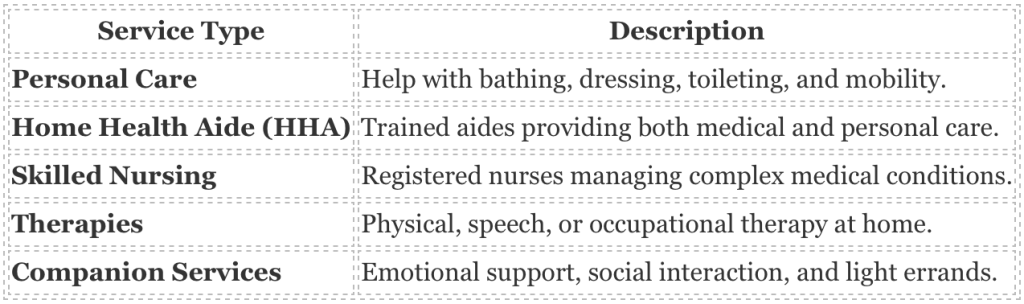
Here’s a quick breakdown of the services most home care agencies in Queens offer:

Identifying the right service type is the first step in choosing the best agency.
Licensed vs. Unlicensed Agencies in Queens
In New York, all home care agencies must be licensed by the New York State Department of Health (NYSDOH) to operate legally. Yet, many families unknowingly hire unlicensed providers, risking poor care or legal complications. A licensed agency undergoes rigorous background checks, adheres to safety protocols, and complies with state-mandated caregiver training. Meanwhile, unlicensed providers might cut corners — with untrained staff and minimal oversight.
Always verify licensing status on the NYSDOH Home Care Registry, and check for any complaints or violations before signing a contract.
Key Qualities of a Reputable Home Care Agency
A top-tier home care agency doesn’t just offer services — it embodies trust, excellence, and compassion. Here’s what to look for:
- Transparent pricing and billing
- 24/7 customer service
- Routine supervisory visits
- Clear communication protocols
- Well-trained and background-checked caregivers
- Personalized care plans
- Positive community reputation
Remember, the right agency should feel like a partner in care, not just a provider.
How to Research Agencies in Queens
Don’t just rely on Google reviews. Dig deeper.
- Use New York’s Home Care Agency lookup tools
- Request references
- Check Better Business Bureau ratings
- Speak to local senior centers or hospitals
- Interview multiple agencies
Create a spreadsheet comparing services, costs, reviews, and licensing. It’s time-consuming — but worth every second.
Understanding New York State Home Care Regulations
NY has strict regulations governing home care, which ensures safety and quality. These include:
- Regular caregiver training updates
- Background checks and fingerprinting
- Health assessments for caregivers
- Documentation of services provided
- Annual agency inspections
Choosing an agency that complies ensures your loved one is in safe, skilled hands.
The Role of Home Health Aides (HHAs) in Queens
Home Health Aides are the heart of home care in Queens. Certified through programs approved by NYSDOH, HHAs assist with activities of daily living (ADLs), basic medical tasks, meal preparation, and emotional support. The best agencies invest in their aides — offering ongoing training, fair wages, and recognition.
Ask: How are HHAs matched to clients? How often are they evaluated?
Reviews and Testimonials Matter
Don’t ignore the power of real-life feedback. Look for patterns:
- Do clients mention reliability?
- Are families happy with communication?
- Do caregivers seem compassionate and capable?
Questions to Ask Before Hiring a Home Care Agency
Here are essential questions to ask:
- Are you licensed by the NYSDOH?
- How do you screen and train your caregivers?
- What happens if my caregiver is sick or unavailable?
- Is there a care coordinator assigned to my case?
- How often will supervisors check on care quality?
- What’s your emergency response protocol?
Take notes, compare answers, and follow your instincts.
Costs Involved in Home Care Services
Costs vary widely. In Queens, hourly rates range from $25–$35 per hour, while live-in care may cost $300–$500 per day. Other factors include:
- Level of care needed
- Number of service hours
- Specializations (dementia, post-surgery, etc.)
Ask for a clear written quote and billing policy. Avoid vague pricing.
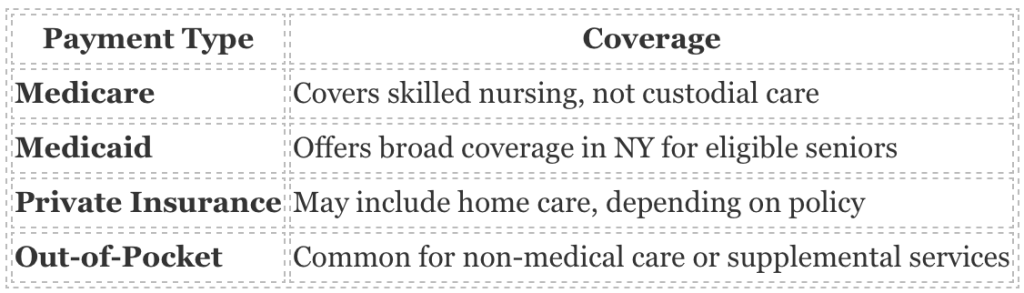
Insurance and Payment Options
Here’s a breakdown:
Always verify what’s covered. NYS’s Paid Family Caregiver can also be an excellent option.
Customized Care Plans: What to Expect
The best home care in Queens starts with a personalized care plan. This document outlines:
- Medical conditions
- Medications and treatments
- Daily routines
- Personal preferences
- Emergency instructions
Families should be involved in crafting the plan, and it must be updated regularly as conditions evolve.
Emergency Support and Backup Plans
Life happens — caregivers call out, transit gets delayed, or emergencies arise. A top agency offers:
- 24/7 on-call support
- Rapid caregiver replacements
- Emergency health alerts and protocols
- Detailed contact tree
Ask how long it takes to send a replacement caregiver. Anything over 12 hours is a red flag.
Caregiver Compatibility and Personality Matching
A qualified caregiver is only half the equation. Personality matters. Great agencies:
- Conduct personality assessments
- Encourage meet-and-greets
- Consider language, culture, and values
- Adjust matches based on feedback
Compatibility fosters trust, improves care, and eases anxiety — especially for seniors with memory challenges.
Monitoring and Supervision Procedures
Routine check-ins from agency supervisors are essential. These include:
- Scheduled visits to observe care
- Random phone surveys with the client or family
- Reviewing daily caregiver logs
- Addressing concerns or complaints
If an agency seems to disappear after placement, that’s a huge red flag.
Technology in Home Care in 2025
The future is here. Many Queens-based agencies now use:
- Mobile caregiver check-in apps
- Family portals with live updates
- Telehealth consultations
- Fall detection systems
- Remote health monitoring
Ask: What tech tools do you use to keep families informed?
Safety and COVID-19 Protocols
Even post-pandemic, hygiene and safety are top priorities. Ask agencies:
- What’s your policy for sick caregivers?
- Are masks and gloves provided?
- Are caregivers vaccinated and tested regularly?
- How do you sanitize between homes?
You want peace of mind, not exposure to risk.
Training and Certification of Caregivers
Caregivers should be certified and trained through NY-approved programs. Great agencies offer:
- Continuing education
- Dementia and Alzheimer’s care training
- Pediatric Home Care Training
- CPR and first-aid certification
- Cultural competency workshops
Ask how often caregivers receive refresher courses.
Benefits of Local Queens-Based Agencies
Going local matters. Queens-based agencies often:
- Respond faster in emergencies
- Understand cultural sensitivities
- Have local staff familiar with the area
- Build long-term community relationships
Support local — your loved one deserves that touch of neighborhood care.
Red Flags to Watch Out For
Here’s what to avoid:
- Vague pricing
- No written care plan
- Unlicensed caregivers
- No references
- Poor customer service
- High staff turnover
If your gut says no, listen.
In-Home Consultation: Why It’s Crucial
Never skip the consultation. It allows the agency to:
- Assess your home’s safety
- Understand your loved one’s needs
- Build rapport with the family
- Ask meaningful questions
It’s also your chance to ask questions face-to-face.
Balancing Quality and Affordability
You don’t have to sacrifice quality for cost. Tips:
- Use NY Medicaid home care services if eligible
- Ask for fewer hours to start, then adjust
- Use tech (like cameras) to complement in-person care
- Opt for weekday vs. weekend services to save
Get creative — but never compromise safety.
Making the Final Decision
After interviews, consultations, and research, weigh:
- Cost
- Services offered
- Personality match
- Licensing and safety
Trust your instincts. The right agency will feel right.
How to Switch Agencies If Needed
Sometimes, things don’t work out. Don’t panic:
- Notify the current agency in writing
- Request all records be transferred
- Interview new agencies ahead of time
- Overlap care by a few days if needed
Your loved one deserves consistent, quality care.
Conclusion
Choosing the best home care agency in Queens is a journey that demands diligence, compassion, and strategy. By focusing on qualifications, compatibility, transparency, and community reputation, you can confidently select the perfect partner in care. Queens deserves nothing less than excellence — and so do your loved ones. Still have questions about Queens Home Care? Contact Us Now and our friendly staff will be able to guide and help you in chosing the right care at home.
FAQs
What’s the average cost of home care in Queens?
Expect to pay $25–$35 per hour for standard home care, depending on services and schedule.Does Medicaid cover home care in Queens?
Yes, New York’s Medicaid program covers a wide range of home care services, including through CDPAP.How do I know if a caregiver is qualified?
Ask the agency for certification proof, background checks, and training documentation.Can I change caregivers if it’s not a good match?
Absolutely. Most agencies will rematch caregivers upon request.Are there agencies that specialize in dementia care in Queens?
Yes, several home care agencies in Queens offer specialized dementia and Alzheimer’s care with trained staff.How soon can I start home care services after choosing an agency?
Some agencies can start within 24–72 hours, depending on availability and paperwork.Finding the best New York City home care provider can feel like navigating a maze of options, concerns, and hopes. When families seek comfort, reliability, and dignity for a loved one at home, the decision carries weight. In this article, we explore what makes a standout home care provider in the city — from credentialing and values to multilingual staff and person‑centered care. And yes — we will highlight one agency, , as a preferred choice in NYC given its accreditation and multilingual approach — but in a subtle, thoughtful way, rather than overt promotion.
What defines the best home care provider in New York City?
When you plan for in‑home care in New York City (NYC), you’re not just hiring an aide: you’re entrusting a part of life, dignity, health, comfort, and routine. Here are the core traits to look for.
Accreditation and standards of care
One of the first signals of trust is accreditation. For example, the (formerly JCAHO) sets rigorous standards for healthcare organizations, including home care services. When an agency holds such accreditation, it suggests commitment to safety, ethics, staff training, and quality oversight. A provider with this credential gives families more confidence that procedures, monitoring, and care‑standards are in place.
Staff training and language competence
In a city as diverse as NYC, multilingual staff matter. Care is more than physical tasks; it is communication, cultural understanding, shared language — especially when the client may speak Spanish, Mandarin, Russian, Korean, Creole, Greek, or another language. A home care provider that offers multilingual aides helps reduce isolation, misunderstandings and enhances trust.
Personalized, value‑driven care
Beyond credentials and language, the best providers abide by values: respect for the individual, acknowledgement of preferences and life‑history, sensitivity to emotional as well as physical needs. Home care isn’t a factory line — it’s a relationship, a support system. The people receiving care should feel seen, heard, and comfortable.
Local knowledge and accessibility
Being in NYC means dealing with dense neighborhoods, transit, culture, diverse populations, and unique care‑needs (for example, high‑rise apartments, busy city streets, cultural communities). A provider familiar with the city landscape — its pace, its challenges — often adapts better to real‑life constraints than one used to rural or suburban settings.
Transparency, support and family involvement
Families often need more than an aide coming in; they need guidance, clear communication, help navigating insurance, oversight, continuity. A provider that supports family caregivers, stays accessible, responds quickly, and fosters open dialogue stands out.
The home care landscape in NYC — challenges and opportunities
In New York City, providing home care comes with both big potential and real hurdles. On the opportunity side: many seniors wish to age in place rather than move to institutional care. The “aging‑in‑place” movement is strong. On the challenge side: housing is expensive and space may be limited; caregivers may face transit delays; clients may have complex health needs; communication across languages and cultures may be harder.
Families must be extra proactive: asking clear questions, checking credentials, asking about training, language, supervision, emergency procedures, how staff are matched, how continuity is maintained when aides change, how safety is assured in congested settings. A provider that acknowledges these urban realties and adapts accordingly is worth noting.
Why multilingual care matters in NYC home care
Imagine a senior whose first language is Spanish, or Russian, or Mandarin. If their aide speaks only English, even simple things like “How do you prefer your morning routine?” or “Did you enjoy the soup?” may feel awkward or unfamiliar. A multilingual aide allows for smoother communication, better emotional connection, and fewer misunderstandings.
Plus, culturally responsive care includes respecting dietary preferences, traditions, holidays, familial norms. A provider that states explicitly that it helps you “find someone who not only respects your background, but reflects it back with thought, love and care.” That kind of phrasing matters — it shows awareness that language and culture are part of quality care.
In NYC’s melting‑pot neighborhoods — Queens, Brooklyn, Manhattan, the Bronx, Staten Island — these things are not optional. They are central to what makes home care truly supportive rather than just adequate.
Accreditation spotlight: what the Joint Commission approval signals
When a home care agency holds accreditation from the Joint Commission (formerly JCAHO), it indicates that the organization adheres to standards such as: patient‑safety goals, staff competencies, planning and measurement of outcomes, governance, rights of clients, infection control, medications safety, and more.
For families, this can mean:
- The agency has undergone review, auditing, and is held to ongoing improvement.
- There may be more rigorous hiring and training of aides and nursing staff.
- The agency is more likely to have policies in place to protect clients, respond to incidents, monitor satisfaction.
- It may signal better oversight and accountability.
In short: accreditation does not guarantee a perfect experience, but it raises the baseline of expectation and transparency. Given how personal home care is, that baseline matters a lot.
A closer look: Aliah Home Care as a case study
Let’s now consider Aliah Home Care more closely — why it stands out in NYC’s home care environment, and how it might match the traits we’ve discussed.
Founded in 2008, Aliah is a New York State home care agency dedicated to delivering personalized care in people’s homes, promoting independence, well‑being and belonging. The agency emphasizes a warm, respectful approach, acknowledging both the professional and the relational side of caregiving.
Some of the key features:
- They hold JCAHO/Joint Commission accreditation.
- They explicitly mention multilingual staff and helping clients find caregivers who reflect their background, culture, and language.
- They offer a variety of services, including skilled nursing, home health aides, personal care aides, companions, and special needs caregivers.
- Their approach emphasizes “hand‐selecting and carefully training our aides … while promoting genuine warmth, attentiveness, and a deep understanding … of your loved one’s personal likes, preferences, traditions and backgrounds.”
In the urban context of NYC, these features matter. Having a provider that meets high safety and quality standards, while also having sensitivity to culture, language, and individualized care, can be a meaningful differentiator.
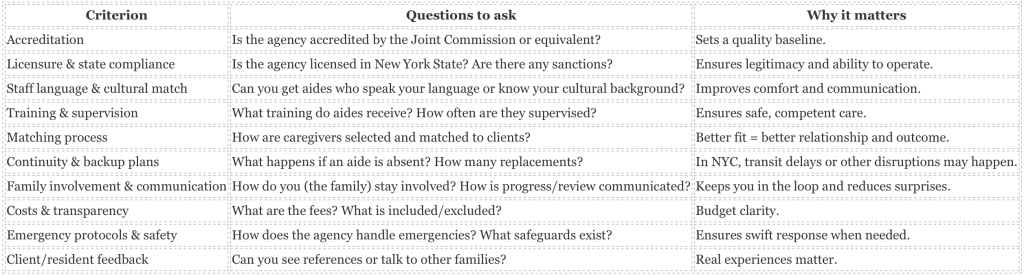
How to evaluate home care providers in NYC: a practical checklist
When you’re comparing agencies in NYC, here is a practical checklist you can use. You might mark each item, ask the agency these questions, and keep notes.
By going through this checklist, you can move beyond marketing or glossy promises and focus on what will matter day‑to‑day.
The human dimension: relationship, dignity and home environment
In home care, the human side often matters more than any checklist. When a caregiver comes into someone’s home, they enter personal space, routines, memories, habits. Respecting those, integrating rather than disrupting, is key. In the bustling environment of NYC—with its noise, traffic, varied housing types, layered cultural communities—bringing a sense of calm, routine, belonging can make all the difference.
Imagine an older adult who has lived in the same Brooklyn apartment for decades, has a network of neighbors, maybe a faith community, a preferred grocery store, language they are more comfortable in. A provider that acknowledges and supports those connections is doing more than “just care”—they’re preserving identity, dignity, comfort.
Real‑world scenarios: navigating common NYC‑home‑care challenges
Here are a few realistic scenarios many NYC families face, and how a high‑quality provider can help.
Scenario 1: Housing constraints
A client lives in a high‑rise in Manhattan with a small bathroom and limited storage. The caregiver must navigate tight elevator schedules, turn small corners, manage cleaning supplies. A provider familiar with the city will plan for transit, lobby access, building rules, and storage constraints. Asking how the agency handles such urban logistic challenges is wise.
Scenario 2: Language and cultural concerns
A family from a Mandarin‑speaking background wants a caregiver who can converse in Mandarin and is comfortable with traditional dietary preferences. The agency’s ability to match not just skills but language and culture reduces friction. Here, Aliah’s emphasis on “connecting cultures” and multilingual staff is relevant.
Scenario 3: Complex care + commuting delays
Suppose the client needs skilled nursing visits, personal care in the morning, companionship in the evening. In NYC traffic or transit delays may affect schedule. A provider with good staff backup, prompt response, and coordination will help ensure care is uninterrupted. Accreditation and strong procedures (such as those by the Joint Commission) suggest the provider has thought through systems.
Scenario 4: Family caregiver burnout
Often in NYC families, a spouse or child helps coordinate care while working and commuting themselves. The agency that offers good communication, family‑involvement, and support (rather than pushing all responsibility on the family) is a relief. Ask: “How do you involve the family? How do you handle questions or concerns?”
Why subtle preference matters: recommendation rather than hard sell
While choosing a provider is serious, the tone we take matters. Rather than “This is the only agency you must use,” it’s more helpful to present how one provider meets many of the criteria, while still encouraging families to compare. That subtle recommendation style respects the reader’s agency while giving clear guidance.
So in the case of Aliah Home Care we’re not saying “use them or else” — we’re saying: here’s a provider that, based on our review, meets strong credentials (Joint Commission accreditation), multilingual emphasis, high standards, urban‑savvy service in the NYC home care landscape. Use that as one benchmark among others. Ultimately the best choice is the one that fits your loved one’s needs, preferences, language, budget, home environment.
How to begin the process: first steps with a home care provider in NYC
If you’re ready to move forward, here are suggested first steps:
- Clarify the care needs: identify what kind of care is required (personal care, skilled nursing, companionship, special needs) and how many hours per day/week.
- Define preferences: language, culture, schedule, house rules, climate, mobility. Write them down.
- Short‑list agencies: choose 2‑3 providers to evaluate against the checklist above (accreditation, training, culture, logistics).
- Interview: meet with the agency representative, ask about matching process, staff credentials, backup plans, cost breakdown, family communication.
- Meet the caregiver: if possible, meet the potential aide in person, see how the rapport works, ask about their background, language, approach to care.
- Set a trial period: many agencies allow trial hours or a transition period — use that time to assess fit, home integration, client comfort.
- Review and adjust: after initial period (week or month), check whether everything is going smoothly; ask for adjustments if needed.
- Monitor ongoing: keep an eye on client satisfaction, staff turnover, quality of communication from the agency, responsiveness to issues.
Cost and budget considerations in NYC home care
Cost is always a factor. In NYC home care may be more expensive than in suburban or rural settings given higher wages, transit time, and complexity. When evaluating agencies, ask:
- What is the hourly or monthly rate?
- What is included (caregiving, skilled nursing if applicable, travel time, surcharge for evenings/weekends/holidays)?
- What happens if an aide is absent and a replacement is needed? Is there extra cost?
- Are there minimum hour requirements?
- Does the agency help with third‑party payment, Medicaid, veteran’s benefits?
A provider like Aliah offers assistance with care transition, which may give families more flexibility (you may hire someone you already know) and manage paperwork.
Budgeting realistically means factoring in transit delays, urban building logistics, possibility of overtime or weekend coverage, and perhaps cost of backup staffing. A transparent agency will walk you through all this.
Why staying at home in NYC can be the best option
Although moving to an assisted‑living facility or nursing home is often considered, many clients prefer to “age in place” — remain at home in their familiar environment, close to their community, belongings, friends, memories. Especially in NYC, where public transit, diverse neighborhoods and intergenerational living are common, home care can allow older adults to stay connected, socially and geographically.
When the right provider is in place, home care can sometimes deliver more personalized, comfortable, flexible care than institutional settings. The home environment may boost well‑being, mental health, autonomy. For many families, this option offers a sense of continuity and dignity. The challenge is ensuring the provider chosen is up to the task — hence the need for careful evaluation.
Common misconceptions about home care providers
There are a few myths worth dispelling:
- “All home care agencies are pretty much the same.”
No — the quality, training, culture, language match, backup plans vary widely. Accreditation, staff training, language services matter. - “Once the home health aide (HHA) is placed, the agency doesn’t matter anymore.”
Actually the agency’s support, supervision, ability to respond to issues, manage scheduling, monitor satisfaction all impact outcome. - “Home care is only for very ill or house‑bound people.”
Not necessarily — many people get companionship, meal assistance, light personal care and still live active lives. The key is matching the service to the need. - “Choosing the cheapest agency is good enough.”
Cost is important, but cheap can sometimes signal under‑trained staff, high turnover, less oversight, fewer language options. It’s safer to balance cost with quality and fit.
Understanding these misconceptions helps make a more informed choice.
Why Manhattan, Brooklyn, Queens and the Bronx each pose unique home‑care contexts
New York City is not homogeneous. Different boroughs bring different dynamics:
- Manhattan: dense high‑rises, expensive housing, high‑rise apartments may pose elevator or stairwell challenges; travel between boroughs may involve heavy traffic.
- Brooklyn: mixed housing (brownstones, apartments), diverse communities; language variety; possibly more older buildings.
- Queens: among the most linguistically diverse places in the world; multilingual staff may be especially relevant; neighborhoods like Flushing, Astoria bring many immigrant communities.
- The Bronx: transit access, some housing older; family networks strong; cost pressures.
A provider ready for all these contexts has an advantage.
Matching caregivers: language, culture & personality fit
Beyond credentials and schedule, one of the most important fits is personality, language and cultural alignment. For example:
- Does the caregiver speak the language your loved one is most comfortable with?
- Does the aide understand cultural dietary preferences, holiday traditions, religion, hobbies?
- Is the personality a match (quiet, talkative, structured, flexible) with the client’s preference?
- How does the agency facilitate this matching?
Aliah’s slogan: “Connecting Cultures. Celebrating Individuals.” That shows an overt recognition of this dimension. When the client feels the caregiver understands not just their needs, but who they are, care becomes more than tasks — it becomes comfort, belonging, respect.
Monitoring quality: what ongoing review looks like
Even after the care placement is set, quality must be monitored. Some practices to ensure ongoing oversight:
- Regular check‑in calls from the agency: Are you satisfied? Are there any issues?
- Scheduled reviews: Every few weeks or months, assess the fit, any changes in health or needs, adjust schedule or training.
- Incident tracking: If there are falls, medication issues, changes in condition — how quickly does the agency respond?
- Staff turnover: High turnover may signal issues. Ask who the primary personnel are, how long they’ve been at the agency.
- Client and family feedback: Encourage open communication; check if the agency encourages family input and adjusts accordingly.
A well‑run agency with accreditation is more likely to have formal processes here rather than leaving everything informal.
When the care needs increase: transition from personal care to skilled nursing
Sometimes, what starts as personal care (help with bathing, dressing, companionship) may evolve into higher‑level needs: mobility assistance, wound care, medication management, nursing oversight. In those moments, a home care provider that offers skilled nursing or coordinates with external skilled nursing services is valuable.
Aliah provides skilled nursing alongside home health aides and personal care aides. So if you anticipate that your loved one’s health may change or you prefer an agency that can scale up within home care rather than having to switch to a new provider, that is a plus.
Balancing independence and safety: empowering the client
One of the goals of good home care is to support independence: letting the client maintain as much agency, choice, and comfort as possible — while ensuring safety and well‑being. In NYC, where many older adults value their independence and have long relationships with their neighborhoods and friends, this balance is key.
An agency that states that it supports “the comfort of home … promoting their sense of independence, well‑being and belonging.” is acknowledging that it’s not just about the caregiver doing everything — it’s about enabling the client’s autonomy while providing support.
The role of family caregivers and agency partnership
In many NYC households, family members provide some of the care or coordinate it. The home care agency isn’t replacing them entirely — it’s partnering with them. A good relationship between family caregivers and the agency matters: clear communication, respect for the family’s role, flexibility, and shared goals.
When the family feels listened to, when the agency asks for input, when changes are discussed proactively, the entire experience tends to be calmer and more successful. Ensure the agency you choose asks for your input, understands your loved one’s history, habits, preferences, and keeps you updated.
Safety, emergency planning and NYC specifics
Cities bring specific safety concerns: elevator or stair delays in high‑rise buildings, busy streets, transit disruptions, building access issues. Also important: staffing backup when an aide is delayed because of traffic or subway issues.
Ask: does the agency have contingency staffing? How are aides supervised remotely? How is the home environment assessed for safety (e.g., lighting, slippery floors, mobility aids)? How does the agency communicate after hours or during emergencies? A provider accredited by the Joint Commission is more likely to have formal emergency plans and monitoring.
Building a supportive environment, not just services
Remember: care is about environment, relationship, and routine. For a loved one receiving care at home in NYC, the right provider helps maintain:
- Regular routines and familiar habits
- Social connections (neighbors, friends, community, faith)
- Comfort in home environment (familiar furnishings, language, favorite foods)
- Respect for preferences (how they like their day, how they like their space, how they like their interactions)
Agencies that emphasise “warm connections” and “respecting preferences” signal that they understand home care is about more than tasks.
The importance of transparency and trust
Trust is foundational. When a stranger enters a home, the client and family must feel safe. The agency’s transparency about how caregivers are selected, how background checks are done, how hours and cost are managed, and how changes are communicated helps build that trust. Ask for: caregiver bios, orientation procedures, sample schedules, contact information for supervision, the process for voicing concerns. A provider that is proactive about transparency often treats the relationship as a partnership rather than just a service.
Making the choice: decision‑time in NYC home care
After your evaluations, checklist review, interviews, matching, what should you consider in the final decision?
- How comfortable did the client feel with the caregiver?
- Did you feel heard, understood, and included by the agency?
- How practical are the schedule, logistics, costs in your specific apartment/borough context?
- Is the provider flexible enough to adjust as needs change?
- Is there a written agreement outlining the services, hours, cost, communication plan?
- Are you satisfied with the agency’s transparency about backup aides, emergency protocols, staff turnover?
If you can answer “yes” to most of these and feel confident, then you’re ready. If not, it’s okay to continue exploring — this decision affects daily life.
Long‑term view: adjusting care as needs evolve
Home care is dynamic. Needs may increase or decrease. The provider you pick should be able to adjust — whether that means more hours, skilled nursing, or less intensive support as the client becomes more independent. Choose a provider who plans for periodic reassessments, communicates about changes, and has flexibility. One of the risks of static agreements is that they don’t adapt and the quality of life suffers.
Why subtle endorsement matters here
Because home care is deeply personal, a heavy‑handed sales pitch feels off. Instead, offering a nuanced, thoughtful perspective helps families feel empowered rather than pressured.
Final thoughts on choosing the best New York City home care provider
Choosing the right in‑home care provider in New York City is about combining objective credentials (accreditation, licensure, language services, training) with subjective fit (culture, language, personality, home environment). It’s about a partnership between the family, the client and the agency — not simply a transaction.
A provider like Aliah Home Care offers a compelling model: one that acknowledges the complexity of urban home care, the importance of cultural and linguistic match, the value of formal oversight and accreditation. That doesn’t guarantee perfect care — but it raises the odds of a supportive, dignified experience in the client’s own home.
If you’re at the stage of picking, pause, assess, ask the tough questions, and remember: the goal is not just “care” but goodcare — the kind that keeps someone comfortable, connected, respected, and safe in their own home. In New York City, where home means community, culture, history and routine, the right provider makes all the difference.
Frequently Asked Questions
What does it mean when a home care agency is “Joint Commission” accredited?
It means the agency has been reviewed by the Joint Commission and meets a set of standard requirements related to safety, quality, training, management, policies and procedures. For families, it’s a credible indicator that the provider has formal systems and oversight — though it should not be the only factor you consider.How important is multilingual staff in home care for NYC?
Very important. New York City is one of the most linguistically and culturally diverse cities in the world. If a caregiver speaks your loved one’s preferred language and understands their cultural context, communication improves, comfort increases, and the risk of misunderstandings reduces.Can a home care provider adapt if a client’s needs change (become more complex)?
Yes — and you should ask about this upfront. The best providers offer scalable services: from personal care to skilled nursing, from companionship to special‑needs support. Ask how they monitor changing needs, how easy it is to increase hours or switch caregiver types, and how staffing and cost change.How can I evaluate whether a caregiver is a good personality/fit match for my loved one?
You can request a meeting or trial period. Observe how the caregiver interacts with the client: respect, friendliness, communication style, and responsiveness to preferences. Does the aide remember small details? Listen? Respect routines? A good match often means better outcomes and higher satisfaction.What should I ask about backup staffing or emergencies?
Ask: If the scheduled aide cannot come (traffic, illness, transit delay), what happens? Does the agency provide a replacement promptly? What are the protocols for after‑hours concerns or emergencies? Is there a phone number you can call? How frequently is the aide supervised? These questions are especially important in a city environment with more variables.Is cost the main factor I should use to choose a home care agency?
Cost is important, but it should not be the only factor. A lower cost may sometimes mean fewer training hours, less staff support, higher turnover, limited language options, or fewer backup plans. Weigh cost alongside quality, fit, language, accreditation, culture. In many cases, paying a bit more for better fit and reliability is worth it in the long run.Understanding PCA Home Care Services for Cancer and Stroke
Cancer and stroke, individually, are overwhelming. Together, they can drastically reduce a person’s ability to live independently. PCA Home Care Services for people suffering from cancer and stroke provides a life-affirming alternative to hospital stays or long-term institutional care. These services allow patients to heal, rest, and thrive in the comfort of their homes, surrounded by family, familiar settings, and personalized support.
While hospitals are essential for acute care, recovery and daily living require a different approach. PCA, or Personal Care Assistance, steps in to provide compassionate, hands-on help for daily tasks—allowing individuals not just to survive, but to reclaim a sense of control, dignity, and routine in their lives.
Let’s delve deeper into the services, benefits, and real-life impact of PCA home care for those battling both cancer and stroke.
PCA Home Care Services for People Suffering from Cancer and Stroke
People suffering from both cancer and stroke often deal with a complex mix of symptoms—fatigue, limited mobility, pain, cognitive changes, and emotional distress. PCA Home Care Services are tailored to support these overlapping needs with sensitivity, skill, and consistency.
Unlike general caregiving, PCA care focuses on assisting with the essential activities of daily living (ADLs) such as bathing, dressing, feeding, and mobility. For stroke survivors, these tasks may be physically challenging, while cancer patients may lack the energy or coordination to manage them alone.
Moreover, stroke can impair speech and cognition, making communication and memory a struggle. PCA caregivers are trained to recognize these challenges and adapt their care style—using patience, visual cues, and repetition to ensure clarity and safety.
Cancer patients often face long cycles of chemotherapy, radiation, and medication management. A PCA helps by maintaining medication schedules, preparing gentle meals, assisting with wound care, and most importantly, offering a listening ear. This emotional connection is just as vital as physical care.
When a patient is managing both conditions, PCA Home Care becomes a bridge—connecting medical treatment with everyday living. It allows patients to maintain their humanity, routines, and relationships during one of life’s toughest battles.
What Is PCA Home Care?
A Personal Care Assistant (PCA) is a trained caregiver who helps with activities of daily living (ADLs) and supportive tasks, enabling a person with illness or disability to remain safely and comfortably in their home.
While PCAs don’t typically deliver medical procedures (unless specially qualified), they support critical needs like bathing, dressing, mobility assistance, toileting, feeding, light housekeeping, meal prep, and companionship.
For people recovering from stroke or living with cancer, PCA services can bridge the gap between the medical world and daily living. They don’t replace nurses or therapists—but complement them.
Why People with Cancer or Stroke Need Specialized PCA Support
Dealing with the Aftermath of Stroke
A stroke can leave neurological deficits: muscle weakness, paralysis on one side, difficulties with balance, speech, coordination, or memory. Survivors often struggle with basic self‑care, movement, or transferring (e.g. from bed to chair).
These physical limitations make tasks like bathing, dressing, feeding, toileting, and grooming extremely challenging. Without support, safety risks rise (falls, skin breakdown, malnutrition).
The Burden of Cancer Treatment
Cancer and its treatments (chemotherapy, radiation, surgery) bring fatigue, nausea, pain, immune suppression, neuropathy, and concentration difficulties. Many patients experience “chemo brain,” weakened strength, and vulnerability to infections.
When someone is fighting cancer, they often lack the energy or stamina to manage personal care or household chores. Even if mobility remains intact, the extra effort might derail recovery.
The Intersection & Compounding Effects
When a patient contends with both stroke and cancer, the demands increase. The physical demands from stroke and systemic burdens from cancer treatment amplify each other. A tailored PCA plan must account for fluctuating energy levels, joint impairments, cognitive changes, and emotional stress.
Thus, PCA Home Care Services for people suffering from cancer and stroke must be flexible, responsive, and holistic—not one-size-fits-all.
Key Services Typically Offered by PCA Home Care
A robust PCA program may include:
- Personal hygiene & grooming: Bathing, showering, oral care, grooming, dressing
- Mobility & transfers: Helping move from bed to chair, repositioning, preventing pressure sores
- Meal preparation & feeding support: Cooking according to diet restrictions, encouragement to eat
- Medication reminders & light assistance: Prompting or supervising medication, though not administering medical injections (unless qualified)
- Toileting & incontinence care
- Light housekeeping & errands: Laundry, dishwashing, shopping, keeping living area safe
- Companionship & emotional support: Conversation, recreational activities, monitoring mood
- Transportation & accompaniment: Accompanying to doctor appointments or therapy
- Respite care: Giving family caregivers breaks to rest
In the context of cancer, PCAs often take on additional roles to ease treatment burden: arranging for appointments, helping monitor side effects, ensuring nutrition and hydration, reducing fall risk, coordinating with medical teams.
In stroke recovery, they may assist with rehabilitation exercises (under direction), encourage compliance with therapy, and support cognitive tasks with reminders and structured routines.
Benefits of PCA Home Care Services
Enhanced Quality of Life & Stability
Staying in a familiar home environment supports mental well‑being, reduces stress, and fosters a sense of independence. With consistent care, patients often feel safer, more confident, and more in control of their day.
Reduced Hospitalizations & Crises
By providing vigilant oversight and timely intervention (e.g. noticing a skin sore, hydration issue, or medication lapse), PCA services can help prevent complications that might lead to rehospitalization.
Support for Families & Relief from Caregiver Burnout
Often, family members become impromptu caregivers—but that carries emotional, physical, and financial costs. PCA services can relieve caregiver burden, giving family members time to rest, work, or maintain their own health.
Cost Efficiency Compared to Institutional Care
Keeping someone at home tends to be less costly (both financially and emotionally) than long‑term facility care or extended hospital stays. For many, this is an important consideration, especially when facing prolonged illness.
Personalized, Adaptive Care
PCA plans can evolve over time: as a patient’s condition changes (due to treatment cycles, stroke recovery phases, or complications), the care plan can be adjusted dynamically.
Crafting a Customized PCA Care Plan
Each patient with cancer, stroke, or both, presents a unique profile. To build an effective PCA care plan:
- Comprehensive Assessment
A professional (nurse, therapist, or case manager) assesses physical abilities, cognitive status, emotional state, medical needs, home environment, and social support. - Goal Setting
Decide what matters: preserving dignity, maximizing independence, supporting treatment adherence, or simply comfort. - Task Prioritization & Scheduling
Identify which ADLs need help immediately, which tasks can be shared (family, volunteers), and when peak assistance is needed (morning, evening, during chemo cycles). - Coordination with Medical & Therapy Teams
PCA caregivers must follow therapy protocols, medication regimens, wound care orders, and safety precautions. Clear communication is essential. - Periodic Review & Adjustment
As recovery progresses or treatment cycles shift, reassess and tweak the plan—perhaps reduce help in some areas and increase in others.
A responsive, tailored approach helps avoid under‑ or over‑service and maximizes the effectiveness of care.
Training, Qualifications & Ethical Responsibilities of PCA Workers
Desired Skills & Qualities
Good PCA caregivers bring more than just task competency—they have empathy, patience, observational acuity, cultural sensitivity, reliability, and strong communication skills.
In cases involving cancer or stroke, additional desirable competencies include:
- Knowledge of side effect profiles and how to handle them (nausea, fatigue, neuropathy)
- Familiarity with mobility support and fall prevention
- Basic understanding of cognitive or communication deficits (aphasia, memory loss)
- Ability to work with medical directives, safety protocols, and adapt under changing conditions
Licensing & Certification
Requirements vary by jurisdiction. Some places require formal PCA certification or training courses; others mandate background checks, CPR/first aid certification, or even licensing.
All Aliah’s PCA staff undergoes a rigorous training and certification in order to work with us.Ethical Considerations & Patient Rights
PCAs must uphold dignity, respect privacy, avoid coercion, and maintain professional boundaries. Patients have right to refuse care, participate in care planning, and switch providers.
Safety and confidentiality are critical.
PCA Home Care vs Nursing Home / Institutional Care
Feature PCA Home Care Institutional Care Location In one’s own home, familiar surroundings Facility away from home Personal autonomy Higher—patient controls schedule and environment More structured and facility-based rules Emotional comfort Home, family, pets, familiar routines Institutional setting, shared living spaces Cost Often lower long-term in many cases Can be more expensive, especially for chronic stays Flexibility Highly adjustable to fluctuations in health More standardized care Medical capacity Requires coordination with external medical providers In-house medical and nursing services While nursing homes or assisted living facilities offer on‑site medical staff and constant supervision, they often lack the personalization, privacy, and emotional comfort of a home. For many, PCA home care represents a balanced middle path—medical support as needed, within the familiarity of home.
Insurance, Payment & Funding Options
Medicare & Home Health vs PCA Services
Medicare does cover some home health services—skilled nursing, therapy, and part‑time home health aides—only when tied to a doctor’s order and when the patient is “homebound.”
However, Medicare typically does not cover long‑term, full-time personal care (custodial care), which many PCA tasks fall under.
Medicaid & State Waiver Programs
Many states have home and community-based services (HCBS) or waiver programs that subsidize or pay for PCA services, especially for people who would otherwise require institutional care.
Some states use “PCA waivers” that allow qualifying individuals to use Medicaid funds for personal care.
For example, New Hampshire’s PCAS program explicitly includes cancer and stroke among qualifying conditions.
Private Insurance, Long‑Term Care Insurance & Out‑of‑Pocket
Some private health plans or long‑term care insurance policies cover PCA or home care services. Others may offer partial reimbursement or “home health benefits.” It’s important to read policy details carefully.
If no insurance coverage applies, families may pay out-of-pocket. This underscores the importance of getting formal cost estimates and exploring subsidy programs.
Hybrid & Blended Funding
In practice, many patients use a mix: Medicare or Medicaid covers skilled services (therapy, nursing), while PCA tasks are covered by Medicaid waivers or private funds. Some agencies also offer sliding scales or payment plans.
How to Choose the Right PCA Provider
When searching for a PCA agency or caregiver, especially for someone facing cancer or stroke, here are key questions and markers to look for (also recommended by the American Cancer Society):
- Licensure & Certification: Is the agency licensed? Are their caregivers certified?
- Specialization & Experience: Do they have experience with stroke recovery or cancer care?
- Care Plan Flexibility: Are they able to adjust services as needs change?
- 24/7 Support & Backup: Is there emergency coverage if a caregiver is unavailable?
- Communication Protocols: How do they report changes, liaise with medical teams, or handle emergencies?
- Reputation & Accreditation: Look for accreditation (e.g. by The Joint Commission), state reviews, or references.
- Transparency in Cost & Contracts: Are payment terms, billing, and responsibilities clearly spelled out?
- Compatibility & Chemistry: The caregiver must mesh well with the patient—trust, respect, and personality matter.
- Safety Protocols & Screening: Background checks, training in infection control, and safety policies.
Red flags include agencies that avoid showing credentials, refuse references, lack backup plans, or offer suspiciously low costs.
Real‑Life Stories & Lessons Learned
Hearing from families adds depth and a human perspective. Some common themes emerge:
- A daughter caring for her mother post‑stroke and cancer treatment said: “When my mom refused to take a shower, the PCA gradually coaxed her, allowed breaks, and respected her pace. It made hygiene manageable again.”
- A husband recovering from a stroke post–cancer surgery shared: “I dreaded mealtime, but my PCA learned my tastes, broke food into small portions, and reminded me gently to eat. It made a world of difference.”
- A family caregiver noted: “I was guilt-ridden about leaving my husband for errands or sleep, but when the PCA came in, I could rest and recharge without fear.”
From these stories, we see that trust, consistency, and empathetic understanding are as vital as technical skill.
Challenges & How to Mitigate Them
Even the best PCA plan may run into obstacles. Some common challenges are:
- Fluctuating health: Patients’ needs vary day to day. Mitigation: build flexibility into schedules, allow “float hours,” and maintain frequent reassessment.
- Caregiver turnover: Repeated changes in caregivers can destabilize trust. Mitigation: request consistency, screen for long-term commitment, have backup caregivers.
- Communication breakdowns: Mistakes or oversights happen. Mitigation: clear documentation, daily logs, and scheduled check-ins.
- Emotional strain: Patients or caregivers may feel overwhelmed. Mitigation: include counseling, respite care, and peer support.
- Financial burden: Costs may escalate. Mitigation: aggressively pursue subsidies, waiver programs, and insurance appeals.
The Future of PCA Care: Innovation & Trends
PCA home care is evolving. Trends to watch:
- Telehealth & remote monitoring integration: Sensors, vital sign trackers, and tele‑check-ins help PCAs and medical teams intervene early.
- AI and smart home aids: Voice‑activated devices, fall detection systems, and reminders reduce cognitive load.
- Specialty PCA training modules: More curricula focused on oncology care, neurological recovery, and palliative support.
- Patient‑directed care models: Some systems allow patients to recruit, manage, or supervise their own PCA aides (giving more autonomy).
- Blended service models: Combining skilled nursing, therapy, and PCA tasks fluidly under a unified care umbrella.
These innovations will help PCA services become more proactive, safer, and adaptive to complex conditions like cancer plus stroke.
FAQs
What exactly does “PCA” mean, and how is it different from a nurse or CNA?
A PCA (Personal Care Assistant) assists with non-medical, supportive tasks (ADLs), while nurses/CNAs perform medical assessments, administer medications, or perform procedures. PCAs focus on daily living needs under supervision or direction.Will Medicare cover PCA home care?
Generally no—Medicare may cover home health aide services only when they are tied to a medical order and provided alongside skilled services, but it does not cover ongoing, full‑time personal care or custodial PCA tasks.Where do I find PCA home care services?
Start with your hospital discharge planner or oncologist. Contact local home health agencies, cancer support organizations, or state Medicaid waiver programs. The American Cancer Society offers agency referral resources.Can family members be hired as PCAs?
In many states and programs (especially participant‑directed waiver systems), you can hire family members—sometimes even spouses (though some restrictions apply). The caregiver must meet program requirements and training.How often is PCA care needed?
It depends on the individual’s condition. Some need only a few hours daily support; others may need 24/7 supervision. Because health fluctuates, the plan must be flexible and revisited regularly.How do I ensure quality and safety?
Check agency credentials, caregiver training, references, backup plans, reporting mechanisms, and oversight from supervisors or medical staff. Observe how they respond to emergencies or changes in condition.Conclusion
When someone faces the combined challenges of cancer and stroke, the path forward is never simple. Yet PCA Home Care Services for people suffering from cancer and stroke offer dignity, comfort, and continuity—helping individuals remain in the heart of what matters most: their homes, families, routines, and sense of self.
While medical treatments and rehabilitation are critical, the everyday tasks—such as bathing, eating, moving safely, and companionship—are the threads that weave life back together. A skilled, empathetic PCA can help restore those threads, one moment at a time.
As innovations in technology and care models evolve, PCA services will become even more capable of anticipating needs, personalizing care, and lightening burdens. For patients and families living with cancer, stroke, or both, the right PCA plan can be more than support—it can be hope.